
When life happens: A conversationwith Dr. Rachel Goldman
Wellness isn't tested when everything is going according to plan — it's tested when life throws you a curveball.
Whether you're navigating a major life transition, feeling stretched too thin or simply trying to keep up with the demands of everyday life, stress is part of being human.
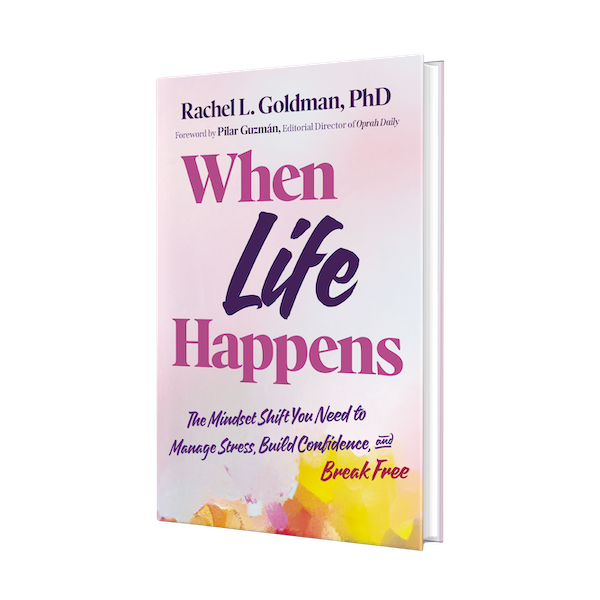
That's one reason When Life Happens by Dr. Rachel Goldman was selected as a recent pick for the Rae Wellness Voices + Stories Book Club, a community dedicated to fostering meaningful conversations around health, personal growth and well-being.

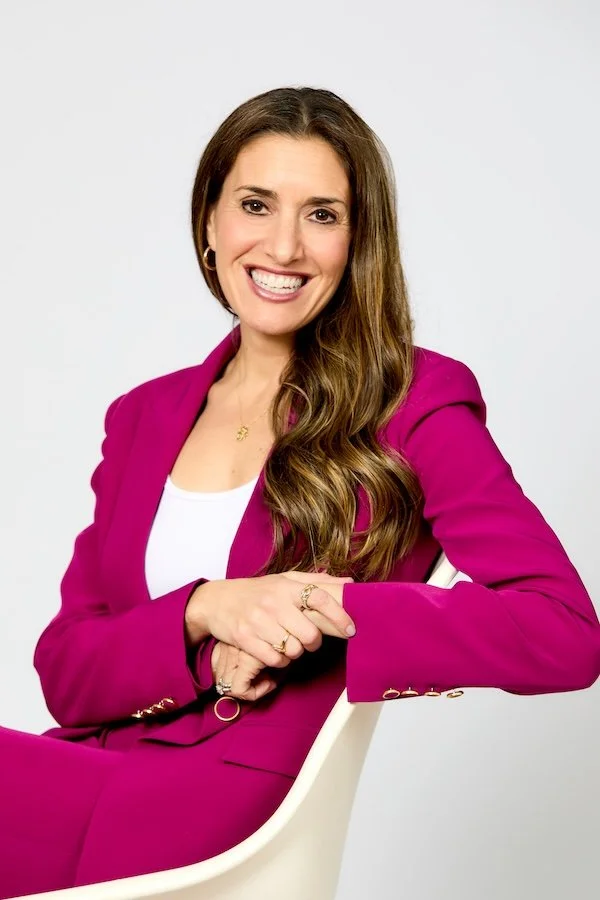
In her new book, Dr. Rachel explores how we can build resilience without chasing perfection, offering practical, evidence-based tools for navigating life's inevitable challenges. We sat down with the psychologist, author and wellness expert to talk about burnout, self-compassion, toxic self-improvement culture and what it really means to care for ourselves when life gets messy.
Q. When Life Happens feels especially relevant right now. What inspired you to write this book, and what did you feel people were missing in the wellness conversation?
A. In my private practice, my work at NYU/Bellevue and through years of working with people navigating health challenges, life transitions and everyday stress, I kept seeing a similar pattern: people feeling stuck, overwhelmed and disconnected from the lives they wanted to be living.
Among many of the women I worked with, that often showed up as being incredibly capable and accomplished on the outside while quietly struggling on the inside. They were doing everything "right," yet felt like they were drowning.
What was missing from the mainstream wellness conversation was real, messy reality. Wellness had become an unreachable luxury list of 90-minute morning routines and toxic positivity. I wrote When Life Happens to bring the conversation back down to earth. We don't need more unrealistic goals; we need a practical roadmap.
Stress is an inevitable part of being alive — life is going to happen. The missing piece was giving women accessible, evidence-based Cognitive Behavioral Therapy (CBT) tools to change how they respond to stress in real time, so they can build genuine resilience before the next storm hits.
Q. There's so much pressure online to "heal perfectly" or always be improving. How can people tell the difference between healthy growth and toxic self-optimization?
A. This is a trap I see so many high-performers fall into.
The easiest way to spot the difference is to check your underlying motivation and your self-talk.
Healthy growth comes from a place of self-compassion and curiosity. It asks, "What does my mind and body need right now to feel good?" It allows for flexibility, rest when tired and aims for being "good enough" rather than flawless.
Toxic self-optimization, on the other hand, is driven by fear, shame and the belief that who you are right now isn't enough. It sounds like a harsh inner critic that constantly measures your life against others and insists, "I should be doing more."
If your wellness routine feels like an aggressive second job where a single missed habit causes a spiral of anxiety, that's not healing — that's optimization culture hijacking your peace. True wellness means having the confidence to look at an unchecked to-do list and say, "I am doing the best I can, and that is completely enough."
Q. What are some subtle signs that someone may be emotionally overwhelmed, even if they appear high-functioning on the outside?
A. Emotional overwhelm doesn't always look like falling apart.
Many people who are overwhelmed continue showing up, meeting deadlines, caring for others and checking all the boxes. From the outside, they may appear to be functioning just fine. The challenge is that stress can build gradually, and we often adapt to it without realizing the toll it's taking.
Some signs to pay attention to include: Feeling disproportionately reactive. You find yourself getting unusually frustrated by minor inconveniences — a slow internet connection, a long line or a misplaced item. Often, it's not about the situation itself; it's a sign that your stress bucket is already close to overflowing.
Difficulty making decisions or getting started. Tasks that would normally feel manageable suddenly feel overwhelming. You may find yourself procrastinating, overthinking simple decisions or struggling to focus.
Physical signs of stress. Chronic stress often shows up physically through tight shoulders, jaw clenching, headaches, disrupted sleep, stomach discomfort or feeling constantly "on edge."
One of the core messages of When Life Happens is that overwhelm isn't a personal failure —it's information. When we learn to recognize these early signals, we can respond with intention rather than waiting until we reach a breaking point.
Q. Many women are balancing careers, caregiving, relationships and wellness routines all at once. What advice do you have for people who feel emotionally exhausted but guilty for slowing down?
A. First, let's normalize this: it makes total sense that you're exhausted.
Too often, people interpret exhaustion as a sign they're not doing enough, when in reality it may be a sign they've been carrying too much for too long.
One of the most common patterns I see is that people feel guilty for slowing down because they've tied their self-worth to being productive, helpful or available to everyone else.
In CBT, we often challenge these beliefs by asking: "Would I hold someone I care about to this same standard?" Usually, the answer is no. To break this cycle, we have to treat rest not as a reward you earn after doing everything else, but as a non-negotiable prerequisite for living. You cannot pour from an empty cup. Pausing isn't selfish; it's maintenance.
Start with what I call a "mindful moment." You don't need a weekend at a spa to reset. Give yourself permission to pause for just two minutes between meetings. Close your eyes, place a hand on your chest and breathe.
When the guilt creeps in — and it will — talk to yourself like you would a friend. You would never tell a chronically exhausted friend to push harder; you'd tell them to rest. Give yourself that same grace.
Q. If someone is going through a difficult season right now, what's one thing you hope they take away from When Life Happens?
A. If you're in the thick of it right now, I want you to remember this: You are not alone. There is absolutely nothing wrong with you. What you're experiencing is part of being human, and things can get better.
One of the most important lessons from When Life Happens is that you don't have to fix everything overnight. When we're struggling, it's easy to believe we need to have all the answers before we can move forward. But meaningful change often starts with one small step, one new perspective or one intentional action.
Life is always going to have challenges. The goal isn't to eliminate stress or avoid difficult emotions. It's to build the skills and confidence to navigate them when they arise.
Most importantly, be kind to yourself. You're doing the best you can with the resources you have in this moment, and that's enough. Take it one step at a time.
Q. Many women are balancing careers, caregiving, relationships and wellness routines all at once. What advice do you have for people who feel emotionally exhausted but guilty for slowing down?
A. First, let's normalize this: it makes total sense that you're exhausted.
Too often, people interpret exhaustion as a sign they're not doing enough, when in reality it may be a sign they've been carrying too much for too long.
One of the most common patterns I see is that people feel guilty for slowing down because they've tied their self-worth to being productive, helpful or available to everyone else.
In CBT, we often challenge these beliefs by asking: "Would I hold someone I care about to this same standard?" Usually, the answer is no. To break this cycle, we have to treat rest not as a reward you earn after doing everything else, but as a non-negotiable prerequisite for living. You cannot pour from an empty cup. Pausing isn't selfish; it's maintenance.
Start with what I call a "mindful moment." You don't need a weekend at a spa to reset. Give yourself permission to pause for just two minutes between meetings. Close your eyes, place a hand on your chest and breathe.
When the guilt creeps in — and it will — talk to yourself like you would a friend. You would never tell a chronically exhausted friend to push harder; you'd tell them to rest. Give yourself that same grace.
Q. If someone is going through a difficult season right now, what's one thing you hope they take away from When Life Happens?
A. If you're in the thick of it right now, I want you to remember this: You are not alone. There is absolutely nothing wrong with you. What you're experiencing is part of being human, and things can get better.
One of the most important lessons from When Life Happens is that you don't have to fix everything overnight. When we're struggling, it's easy to believe we need to have all the answers before we can move forward. But meaningful change often starts with one small step, one new perspective or one intentional action.
Life is always going to have challenges. The goal isn't to eliminate stress or avoid difficult emotions. It's to build the skills and confidence to navigate them when they arise.
Most importantly, be kind to yourself. You're doing the best you can with the resources you have in this moment, and that's enough. Take it one step at a time.
In her new book, Dr. Rachel explores how we can build resilience without chasing perfection, offering practical, evidence-based tools for navigating life's inevitable challenges. We sat down with the psychologist, author and wellness expert to talk about burnout, self-compassion, toxic self-improvement culture and what it really means to care for ourselves when life gets messy.
Q. When Life Happens feels especially relevant right now. What inspired you to write this book, and what did you feel people were missing in the wellness conversation?
A. In my private practice, my work at NYU/Bellevue and through years of working with people navigating health challenges, life transitions and everyday stress, I kept seeing a similar pattern: people feeling stuck, overwhelmed and disconnected from the lives they wanted to be living.
Among many of the women I worked with, that often showed up as being incredibly capable and accomplished on the outside while quietly struggling on the inside. They were doing everything "right," yet felt like they were drowning.
What was missing from the mainstream wellness conversation was real, messy reality. Wellness had become an unreachable luxury list of 90-minute morning routines and toxic positivity. I wrote When Life Happens to bring the conversation back down to earth. We don't need more unrealistic goals; we need a practical roadmap.
Stress is an inevitable part of being alive — life is
going to happen. The missing piece was giving women accessible, evidence-based Cognitive Behavioral Therapy (CBT) tools to change how they respond to stress in real time, so they can build genuine resilience before the next storm hits.